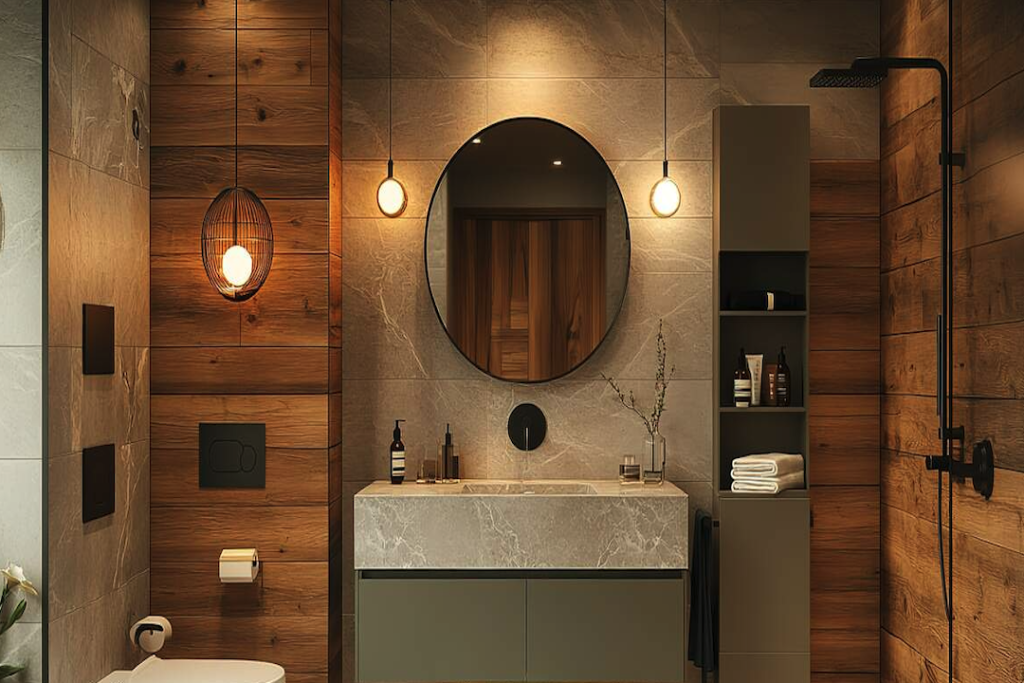
Looking to upgrade your bathroom lighting? A stylish vanity ceiling light can make a big difference. It’s often overlooked, but the right overhead fixture can transform the feel of your bathroom, providing both functional illumination and a decorative element that ties the space together. Forget those basic, builder-grade boob lights – there are plenty of attractive options that offer much more than just brightness.
Why Your Current Bathroom Light Probably Isn’t Cutting It
Many bathrooms suffer from poor lighting Looou . Often, there’s just a single, central fixture that casts harsh shadows, especially when you’re trying to get ready in front of the mirror. This isn’t just unflattering; it makes tasks like applying makeup or shaving more difficult.
- Shadow Play: A direct overhead light can create shadows under your eyes, nose, and chin, making it hard to see fine details.
- Insufficient Brightness: Some fixtures simply don’t put out enough light for a task-oriented space like a bathroom.
- Outdated Aesthetics: Let’s be honest, those old glass dome lights haven’t aged well. They can make an otherwise updated bathroom feel dated.
Choosing the Right Style for Your Space
The beauty of vanity ceiling lights is the sheer variety available. You can find options to complement almost any bathroom aesthetic, from modern minimalist to rustic farmhouse.
Modern & Contemporary Options
For a sleek, uncluttered look, consider fixtures with clean lines and geometric shapes.
- Flush Mounts with Diffusers: These sit snug against the ceiling and often feature frosted or acrylic diffusers that spread light evenly. Think minimalist designs in polished chrome, brushed nickel, or matte black.
- Recessed Lighting with Trim Kits: While technically not a single “vanity ceiling light,” a cluster of recessed lights strategically placed above the vanity can offer excellent, discreet illumination. Consider square trims for a contemporary edge.
- LED Panels: Ultra-thin LED panels can provide a very modern, almost futuristic look while offering excellent light output and energy efficiency.
Traditional & Classic Selections
If your bathroom leans towards a more timeless or ornate design, there are plenty of options to match.
- Drum Shades: A classic drum shade fixture, often with a fabric or linen cover, provides a soft, diffused light and a touch of elegance. Look for finishes like oil-rubbed bronze or antique brass.
- Semi-Flush Mounts with Ornate Details: These fixtures hang
slightly below the ceiling and can feature decorative arms, crystal accents, or frosted glass shades that evoke a more traditional feel.
- Tiffany-Style Fixtures: For a truly classic or vintage aesthetic, a Tiffany-style ceiling light with stained glass can be a beautiful focal point, though it’s important to consider if the colored light will interfere with grooming tasks.
Industrial & Farmhouse Vibes
These styles often embrace raw materials and a slightly rugged, yet refined, aesthetic.
- Cage Lights: Fixtures featuring metal cages around exposed bulbs can provide an industrial edge. Edison bulbs are a common pairing here.
- Barn Lights: While often seen as wall sconces, some smaller pendant-style or semi-flush barn lights can work well, particularly in larger bathrooms with high ceilings. Look for finishes in matte black or galvanized steel.
- Wood Accents: Combining metal with natural wood elements can bridge the gap between industrial and farmhouse, offering warmth and texture.
Beyond Aesthetics: Considering Lumens and Color Temperature
While style is important, a light’s primary job is to illuminate. Don’t overlook the technical aspects that ensure your new fixture is actually functional.
Understanding Lumens for Brightness
Lumens measure the amount of visible light emitted by a source. The higher the lumen count, the brighter the light.
- Bathroom Needs: For adequate task lighting around a vanity, you’ll want a good lumen output. A general guideline is around 75-100 lumens per square foot for ambient lighting, with additional lumens for task areas.
- Combine with Sconces: Remember, your vanity ceiling light is often part of a layered lighting scheme. It works best in conjunction with wall-mounted sconces on either side of the mirror or an integrated LED mirror. This combination eliminates shadows.
- Dimmable Options: Always opt for a dimmable fixture. This allows you to adjust the brightness based on the time of day or your specific needs, from bright task lighting to a softer, more relaxing glow.
Choosing the Right Color Temperature (Kelvin)
Color temperature, measured in Kelvin (K), describes the warmth or coolness of the light. This significantly impacts the mood and appearance of your bathroom.
- Warm White (2700K-3000K): This light has a yellowish tint, similar to incandescent bulbs. It’s cozy and inviting but can be less ideal for precise grooming as it might alter the true colors of makeup.
- Cool White (3500K-4100K): This is a more neutral, balanced white light. It’s often preferred for bathrooms as it provides good clarity without being too harsh. It’s a good middle-ground for accurate color representation.
- Daylight (5000K-6500K): This mimics natural daylight and is very bright and bluish-white. While excellent for tasks requiring extreme clarity, it can feel sterile or harsh for some, especially in the mornings or evenings.
- What to Aim For: For a vanity light, something in the 3500K-4000K range is generally recommended. It provides good, clear illumination without making you look jaundiced or washed out. Consistency in color temperature across all your bathroom lights creates a more cohesive feel.
Installation Considerations and Sizing It Right
Before you fall in love with a fixture, make sure it’s practical for your bathroom.
Sizing for Impact and Function
An inappropriately sized light can look awkward or fail to provide enough illumination.
- Bathroom Size: For a small powder room, a smaller flush mount or semi-flush mount might be perfect. In a larger master bathroom, you might need a more substantial fixture or even two smaller ones, depending on the length of your vanity.
- Ceiling Height: If you have very low ceilings, a flush mount is usually the safest bet to avoid anyone bumping their head. Higher ceilings offer more flexibility, allowing for semi-flush mounts or even smaller pendant-style fixtures if they are appropriately positioned.
- Proportion to Vanity: Generally, the ceiling light should complement the size of your vanity. A tiny light above a double vanity will look lost, while an oversized fixture can overwhelm a small single vanity.
Wiring and Professional Help
Unless you’re very confident in your electrical skills, installing a new ceiling light is often best left to a professional electrician.
- Existing Wiring: Most bathrooms will have existing wiring for a central ceiling light. However, if you’re relocating the fixture or adding new ones, new wiring may be required.
- Weight of the Fixture: Some fixtures, especially those with heavy glass or crystal elements, can be quite heavy. Ensure your ceiling box and mounting hardware can support the weight.
- Dimmer Switches: If you’re upgrading to a dimmable fixture, you’ll need a compatible dimmer switch. An electrician can install this along with the light.
- Safety First: Dealing with electricity can be dangerous. An electrician ensures the installation meets local building codes and is safe.
IP Rating for Wet Environments
Bathrooms are wet environments, so it’s crucial to select lights with an appropriate Ingress Protection (IP) rating.
- Understanding IP Ratings: The IP rating indicates how well an electrical enclosure is protected against solids (like dust) and liquids (like water). The first digit refers to solids, the second to liquids.
- Bathroom Zones: Bathrooms are often divided into zones based on proximity to water.
- Zone 0: Inside the bath or shower tray. Requires IPX7. (Unlikely for a ceiling light).
- Zone 1: Directly above the bath or shower, up to 2.25m from floor. Requires IPX4.
- Zone 2: Area within 60cm of Zone 1 and 2.25m from floor. Also within 60cm of any wash basin. Requires IPX4.
- Outside Zones: Any area outside zones 0, 1, and 2. No specific IP required, but generally IP20 is recommended for general safety against solid objects larger than 12.5mm.
- Vanity Ceiling Lights: For lights directly above a vanity, especially if it’s not directly over the shower or tub, an IP20 or IP21 might be acceptable, but an IP44 offers better protection against splashes and moisture, making it a safer and more durable choice for most bathroom applications. Always check the manufacturer’s specifications.
Energy Efficiency and Maintenance
Modern lighting offers better efficiency and often requires less upkeep.
LED: The Smart Choice
LED (Light Emitting Diode) technology has revolutionized home lighting.
- Energy Savings: LEDs consume significantly less energy than traditional incandescent or halogen bulbs, which translates to lower electricity bills.
- Long Lifespan: LEDs last much longer, often tens of thousands of hours, meaning you won’t be changing bulbs frequently. This is particularly convenient for ceiling fixtures that can be tricky to reach.
- Instant On: Unlike some older CFLs, LEDs power on instantly to full brightness.
- Less Heat: LEDs produce very little heat, which is a bonus in a bathroom where ventilation is often a concern.
- Integrated LEDs: Many modern fixtures come with integrated LED modules, meaning the bulbs aren’t replaceable. While this is efficient, it means replacing the entire fixture should the LED fail, though their lifespan typically surpasses conventional bulbs by a wide margin.
Easy Cleaning and Maintenance
Bathroom fixtures, exposed to steam and humidity, can get dusty or streaky.
- Simple Designs: Choose fixtures with minimal nooks and crannies to avoid dust accumulation. Smooth glass or acrylic diffusers are easier to wipe clean than intricate metalwork with many small parts.
- Durable Finishes: Look for finishes that resist tarnishing and corrosion, such as brushed nickel or chrome, which are easy to maintain with a soft cloth and mild cleaner. Matte black is also increasingly popular and generally quite durable.
- Access for Cleaning: Consider how easily you can access the light fixture for cleaning or bulb replacement (if applicable). Flush mounts with twist-off diffusers are often simpler to clean than complex multi-shade fixtures.
Upgrading your bathroom’s vanity ceiling light isn’t just about functionality; it’s an opportunity to inject personality and elevate the overall design of the space. By considering style, brightness, color temperature, and practical installation factors, you can choose a fixture that perfectly complements your bathroom renovation and provides years of reliable, attractive illumination.


More Posts
Elevate Your Outdoor Space with Stylish Solar Path Lights
Best Waterproof Outdoor Lanterns for Covered Porches
Modern Bedside Table Lamps: USB-Enabled Convenience