Finding the right color temperature for your balcony ceiling light is a big deal for setting the mood, and the short answer is: it depends entirely on the atmosphere you’re trying to create and the activities you plan to do out there. There’s no single “perfect” temperature, but understanding the options will help you make a choice that truly enhances your outdoor living space, making it feel just right for everything from a cozy evening read to a lively gathering. Let’s dive into the specifics so you can pick with confidence.
Understanding Color Temperature and Your Balcony
Before we get into specific recommendations, let’s quickly clarify what “color temperature” actually means in the world of lighting. It’s measured in Kelvins (K) and describes the visible warmth or coolness of a light source. Think of it like this: lower Kelvin numbers (around 2000K-3000K) produce a warm, yellowish-white light, similar to a traditional incandescent bulb or candlelight. As the Kelvin number increases (around 4000K-5000K), the light becomes more neutral or “cool,” appearing whiter, like natural daylight. Go even higher (5000K-6500K), and you’ll get a very cool, bluish-white light, often seen in commercial or task-oriented settings.
For your balcony, this isn’t just a technical detail; it’s a critical element of design and function. The color temperature you choose will significantly impact how your balcony feels, how colors appear, and even how you perceive the space around you. It sets the stage for every moment spent outdoors, influencing relaxation, productivity, and social interaction.
The Kelvin Scale: Your Lighting Compass
The Kelvin scale is your primary tool for navigating color temperature. It’s a continuous spectrum, not just a few distinct points, but for practical purposes, we often group temperatures into broad categories.
- Warm White (2200K – 3000K): This range is characterized by a soft, inviting glow. It often has a noticeable yellow or orange tint, reminiscent of candlelight or an early sunset. It’s excellent for creating a relaxed, intimate, and cozy atmosphere. Think of a classic Edison bulb or the warm light from a fireplace.
- Neutral White (3000K – 4000K): Sometimes called “soft white” or “cool white” by some manufacturers, this range is more balanced. It’s less yellow than warm white but not starkly blue. It offers good visibility without being overly stimulating, making it versatile for many applications. It’s a common choice for general indoor lighting where you want a natural feel.
- Cool White / Daylight (4000K – 5500K): This light mimics natural daylight during midday. It’s bright, crisp, and clean, with a subtle blue tint. It’s often used in areas where high visibility and concentration are important, like kitchens, offices, or workshops. Colors tend to appear truer under this light.
- Bright Daylight / Blueish White (5500K – 6500K+): At the higher end, the light takes on a distinct bluish cast. While it provides maximum brightness and clarity, it can feel clinical or harsh in a residential setting, especially outdoors at night. It’s generally reserved for very specific task lighting or commercial applications where detail is paramount.
Understanding these ranges is the foundation for making an informed choice. It’s not about one being inherently “better” than another, but about aligning the light’s characteristics with your specific needs and aesthetic preferences for your balcony.
Setting the Mood: Matching Ambiance to Color Temperature
This is where the magic happens. Your balcony is an extension of your home, and the lighting should reflect the various moods and functions you envision for it. Different activities and desired feelings call for distinct color temperatures.
Cozy Evenings and Relaxation (2200K – 2700K)
If your balcony is primarily a retreat for unwinding after a long day, enjoying a quiet drink, or having intimate conversations, a very warm white is your best friend.
- Why it works: Light in this range (often labeled “extra warm white” or “ultra warm white”) closely mimics candlelight or the glow of a fire. It’s incredibly soothing and reduces visual stimulation, encouraging relaxation. The deep yellow-orange tones create a sense of comfort and intimacy, making the space feel smaller and more enclosed in a pleasant way. It’s perfect for creating a “hygge” atmosphere.
- Ideal activities: Reading a book, enjoying a glass of wine, quiet conversations, romantic dinners, meditation, or simply gazing at the stars.
- Things to consider: While exceptionally cozy, this light isn’t ideal for tasks requiring sharp visual acuity. Colors might also appear slightly muted or altered due to the strong warm tint. If your balcony is used for more than just relaxing, you might want to consider dimming capabilities or supplementary task lighting.
General Lounging and Socializing (2700K – 3000K)
For a balcony that serves as a versatile outdoor living room – a place where you might host friends, enjoy meals, or just generally hang out – a slightly warmer white strikes a great balance.
- Why it works: This range is similar to traditional incandescent bulbs. It’s still warm and inviting but offers a bit more clarity than the ultra-warm options. It makes people look good, creates a welcoming atmosphere for guests, and is comfortable for longer periods. It prevents the space from feeling too dim or too stark.
- Ideal activities: Casual dining, entertaining guests, playing board games, general conversations, everyday relaxation.
- Things to consider: This is a very popular and safe choice. It’s warm enough to be comfortable but bright enough for most general activities. It might not be quite as “cozy” as the lower Kelvin options, but it’s significantly more functional for varied use.
Functional Yet Comfortable (3000K – 3500K)
If your balcony occasionally doubles as a workspace, a craft area, or a spot for activities requiring a bit more visual precision, but you still want a residential feel, moving into this neutral warm range is sensible.
- Why it works: This is where the light starts to lean towards neutral, but still retains a hint of warmth. It offers good color rendering and excellent visibility without feeling clinical. It’s a good compromise when you need functionality but don’t want to sacrifice all coziness. It’s often used in kitchens and bathrooms indoors.
- Ideal activities: Reading intricate details, doing hobbies like knitting or drawing, preparing food (if you have an outdoor kitchen setup), light work tasks.
- Things to consider: While more functional, it will start to feel less “romantic” than warmer temperatures. It’s important to test this range to ensure it doesn’t feel too cool for your personal preference on a balcony.
Task-Oriented and Bright (4000K – 5000K)
For balconies primarily used for specific tasks, or if you prefer a bright, crisp, modern aesthetic, a cooler white might be appropriate.
- Why it works: This light is bright and clear, enhancing visibility and making colors appear more vibrant and true. It can create a very clean and contemporary look. It’s great for tasks where precision is key.
- Ideal activities: Detailed gardening, specific crafts, reading blueprints, or any activity requiring high visual acuity. Also popular in modern, minimalist designs where a bright, stark look is desired.
- Things to consider: For many residential balconies, this can feel too cool, harsh, or even sterile, especially at night. It’s less conducive to relaxation and can make the space feel more utilitarian. If you opt for this, consider using it with dimmers or as part of a layered lighting scheme so you can switch to warmer light when desired. It can also attract more insects at night due to the higher blue light content.
Practical Considerations Beyond Ambiance
While mood is paramount, several practical factors should influence your color temperature decision. These elements can make or break the functionality and enjoyment of your balcony lighting.
Integrating with Existing Lighting
Look at your home’s exterior lighting, as well as the interior lighting that spills onto the balcony. Consistency or thoughtful contrast can be beneficial.
- Harmony: If your indoor living room (which might open onto the balcony) uses 2700K light, carrying a similar or slightly warmer temperature (e.g., 2200K-2700K) onto the balcony can create a seamless transition and extend the feeling of your indoor space outdoors. A sudden jump to 4000K on the balcony when your interior is 2700K can feel jarring.
- Contrast for definition: Sometimes, a subtle contrast works well. For instance, if your main exterior security lights are cool white (for visibility), using a much warmer temperature on your balcony ceiling light can clearly define it as a separate, more inviting zone.
- Pathway lights: If you have pathway lights leading to or around the balcony, consider their color temperature. You generally want these to be in a similar warm range (2200K-3000K) to avoid a patchwork of different light qualities.
Layered Lighting and Dimming Capabilities
The “perfect” color temperature might actually be a range that you can adjust. Layered lighting and dimming are game-changers for balcony ambiance.
- Layering: Instead of relying on a single ceiling light for all your needs, consider incorporating other light sources. For instance, a warm white (2700K) ceiling light for general ambiance can be complemented by even warmer (2200K) string lights for extra coziness, or a directional neutral white (3500K) task light for reading.
- Dimmers: This is arguably the single most important feature for flexible balcony lighting. A ceiling light with a good dimmer allows you to adjust the brightness to suit any mood or activity. Many LED bulbs also offer “dim-to-warm” technology, where the light automatically gets warmer (lower Kelvin) as you dim it down, mimicking incandescent bulbs and creating an incredibly versatile fixture. This is ideal if you need 3000K for dinner but want 2200K for after-dinner drinks.
- Smart lighting: Smart bulbs and fixtures take flexibility even further. Many allow you to change both brightness and color temperature (Tunable White LEDs) from an app or voice control. This means you can have 5000K for a morning yoga session and then switch to 2200K for an evening cocktail party with the same fixture. While a greater initial investment, the long-term versatility is unmatched.
Regional Climate and Seasonality
The environment around your balcony can subtly influence your color temperature choice.
- Warm climates: In warmer climates, a slightly cooler temperature (say, 3000K-3500K) might feel more refreshing than very warm, yellow light, which can sometimes visually intensify the feeling of heat.
- Cool climates: Conversely, in cooler regions, a very warm light (2200K-2700K) can add a much-needed sense of warmth and coziness, making the outdoor space more inviting on chilly evenings.
- Seasonal variation: If your balcony is used year-round, or if you experience significant seasonal changes, smart lighting that allows for color temperature adjustment is highly advantageous. You might prefer a brighter, slightly cooler light in summer and a much warmer light in winter.
Insect Attraction
This is a frequently overlooked but significant factor for outdoor lighting.
- Blue light and insects: Insects are generally more attracted to shorter wavelength light, which includes blue and ultraviolet light. This means cooler color temperatures (4000K-6500K) which contain more blue light, tend to attract more bugs than warmer temperatures.
- Warmer is better: If you’re plagued by insects on your balcony, opting for a warmer color temperature (2200K-2700K), especially with a yellow or amber tint, can significantly reduce the number of bugs hovering around your light fixture. Some specialized “bug light” bulbs are designed with a very warm, yellowish hue for this very purpose.
- Shielding: Regardless of color temperature, using fixtures that direct light downwards or have good shielding can also help minimize insect congregation around the light source itself.
Choosing the Right Fixture: Beyond the Bulb
It’s not just the bulb; the fixture itself plays a crucial role in how light is distributed and perceived on your balcony. Selecting the right type of ceiling fixture ensures your chosen color temperature performs optimally.
Flush Mount vs. Semi-Flush Mount
These are common choices for balconies, especially where ceiling height is a consideration.
- Flush Mount: These fixtures attach directly to the ceiling, with little to no gap.
- Pros: Ideal for balconies with lower ceilings as they don’t hang down. They provide widespread, diffused light, which is great for general ambiance. Often discreet and blend seamlessly.
- Cons: The light source is less directional, which means you might lose some impact from a specific color temperature if it’s too widely diffused. Can sometimes create a “flat” lighting effect if not paired with other light sources.
- Best for: General, even illumination in smaller spaces or those with limited head height.
- Semi-Flush Mount: These fixtures hang a few inches below the ceiling, creating a small gap between the fixture and the ceiling.
- Pros: Offers a slightly more decorative look than flush mounts. The gap allows some light to reflect off the ceiling, which can create a softer, more layered effect and reduce harsh shadows.
- Cons: Not suitable for very low ceilings where head clearance is an issue.
- Best for: Adding a decorative touch while still providing good general lighting, especially in medium-height ceilings.
Pendant Lights
Pendant lights hang down from the ceiling, often suspended by a cord, rod, or chain.
- Pros: Excellent for creating focused zones of light, like over a small dining table or a reading nook. They can be a strong decorative element, adding style and personality. The light source is closer to eye level or task level, making the chosen color temperature more immediately impactful.
- Cons: Not suitable for high-traffic areas where people might bump into them. Requires sufficient ceiling height. Can feel out of place if the balcony is very small or narrow.
- Best for: Specific task lighting, defining functional zones, or as a statement piece in larger balconies with ample vertical space.
Recessed Lighting (Pot Lights)
These fixtures are installed directly into the ceiling, with only the trim visible.
- Pros: Extremely discreet, offering a clean, modern aesthetic. They provide focused downward light, which can be useful for highlighting specific areas or architectural features. Excellent for layering with other light sources.
- Cons: More complex to install as they require cutting into the ceiling structure. Less versatile for repositioning once installed. The light can be very directional, sometimes creating harsh shadows if not well-planned.
- Best for: Modern balconies where a minimalist look is desired, providing accent lighting, or as part of a multi-light scheme for general illumination. Ensure they are rated for outdoor (wet/damp) locations.
Wall-Mounted Fixtures (Sconces)
While not “ceiling lights,” wall sconces often complement ceiling fixtures and contribute significantly to the overall light quality and ambiance.
- Pros: Can add a beautiful wash of light upwards or downwards, creating architectural interest. They provide ambient light without taking up ceiling space. Great for defining vertical planes and adding depth.
- Cons: Limited in terms of general overhead illumination. Placement needs careful consideration to avoid glare or obstruction.
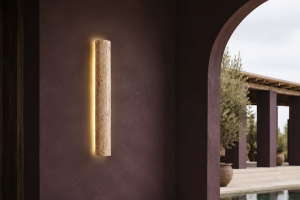
- Best for: Adding supplementary ambient light, highlighting wall textures, or providing indirect glow to enhance the overall chosen color temperature.
Material and Finish of the Fixture
The physical characteristics of the fixture itself can subtly influence how the light is perceived.
- Opaque vs. Translucent Shades: A completely opaque shade will direct all light downwards, creating a more defined pool of light. A translucent shade will diffuse light more broadly, softening the effect of the color temperature.
- Reflective Interiors: Fixtures with highly reflective interiors (e.g., polished chrome, white paint) can make a light appear brighter and slightly cooler, even with a warm bulb. Conversely, dark or matte interiors can absorb some light, making it seem warmer or softer.
- Color of the Fixture: While less impactful than the bulb itself, a warm-toned fixture (e.g., bronze, copper) can reinforce a warm ambiance, while a cool-toned fixture (e.g., brushed nickel, black) might visually align better with cooler light temperatures.
Remember, the goal is often a balanced lighting scheme. A single ceiling light rarely meets all needs. Think about how your chosen ceiling fixture’s light distribution will interact with other elements, such as wall sconces, string lights, or even portable lanterns, to build a cohesive and inviting environment.
Testing and Fine-Tuning Your Balcony Lighting
You’ve done your research, considered your needs, and picked a color temperature. Now comes the crucial step: putting it into practice and making sure it feels right. Lighting is highly personal, and what looks good on paper might need a little tweaking in reality.
The Importance of a Test Run
Before committing to multiple expensive bulbs or a hardwired fixture, conduct a test. This is especially true if you’re torn between a few Kelvin temperatures or want to see how a certain temperature interacts with your balcony’s specific materials and surrounding environment.
- Buy one bulb: Purchase a single LED bulb in the color temperature you’re considering. Many hardware stores offer inexpensive LED bulbs in various Kelvin ratings.
- Temporary fixture: If possible, test it in a temporary fixture that mimics your intended ceiling light, or even just hold it up to the ceiling in the evening.
- Observe at different times: The way a light looks at dusk will be different from how it looks after dark. Observe it during the hours you’ll most frequently use your balcony. Also, consider how it interacts with any ambient light from neighboring buildings or streetlights.
- Note surrounding colors: See how your furniture, plants, and wall colors appear under the chosen light. Warmer lights can enhance reds, oranges, and yellows, while cooler lights make blues, greens, and whites pop.
- Consider your mood: Does the light evoke the feeling you want? Is it relaxing? Inviting? Too stark? Too dim?
Taking Advantage of Tunable White or Dim-to-Warm Technologies
If you’re still on the fence, or if your balcony serves multiple functions, investing in adjustable lighting can save you a lot of headache.
- Tunable White LEDs: These bulbs or fixtures allow you to manually adjust the color temperature across a wide range (e.g., 2700K to 5000K) using a remote, app, or wall switch. This is the ultimate flexibility, letting you experiment with different temperatures for various activities or times of day. You could have a brighter, slightly cooler light for working on plants in the afternoon and switch to a very warm, cozy glow for evening relaxation, all from the same fixture.
- Dim-to-Warm LEDs: As mentioned earlier, these LEDs mimic traditional incandescent bulbs by shifting to a warmer color temperature as they are dimmed. This is fantastic for creating a truly cozy atmosphere at lower light levels, while still providing brighter, slightly less warm light when fully on. If your primary goal is ambiance and comfort with the option for functional brightness, this technology is highly recommended.
Troubleshooting Common Lighting Issues
Even with careful planning, you might encounter issues. Here’s how to address some common ones:
- “Too Bright/Too Harsh”: This often means your color temperature is too high (too cool) for the desired ambiance, or the lumen output (brightness) is simply too much.
- Solution: Dim the light if possible. If not, consider a bulb with lower lumens. If the harshness is due to the color temperature, switch to a warmer (lower Kelvin) bulb. Also, check if the fixture itself is diffusing the light poorly; sometimes a different shade can soften the output.
- “Too Dim/Cannot See”: You might have chosen a color temperature that’s too warm for the task, or the lumen output is insufficient.
- Solution: Increase the lumen output (a brighter bulb). If clarity is the issue, move to a slightly cooler (higher Kelvin) color temperature. Consider adding supplementary task lighting or accent lights to boost overall illumination in specific areas without making the ceiling light overwhelming.
- “Feels Cold/Uninviting”: This almost always points to a color temperature that is too high (4000K+), which can feel clinical or sterile in a residential setting.
- Solution: Immediately try a warmer (lower Kelvin) bulb, starting around 2700K-3000K. Incorporate other warm light sources like string lights or candles to counteract the coolness.
- “Attracting Too Many Bugs”:
- Solution: Your color temperature is likely too high (4000K+). Switch to a very warm white (2200K-2700K) or even an amber “bug light” specific bulb. Ensure your fixture directs light downwards or has good shielding to minimize the light going upwards.
Ultimately, the perfect color temperature for your balcony ceiling light is the one that makes you feel most comfortable, happy, and allows you to use your outdoor space exactly how you envision. Don’t be afraid to experiment, and remember that flexible solutions like dimmers and tunable white bulbs offer the best of all worlds.

More Posts
Elegant White Ceramic Desk Lamp in Hollywood Regency Style Decor
Retro Modern Travertine Stone Outdoor Lantern: Timeless Elegance
Elevate Your Outdoor Space with Stylish Solar Path Lights